






Learn about Mexico in facts and figures. Updated annually, this article shares a snapshot of Mexico’s geographic, demographic, and key economic data.
We update this article each year when key annual economic data about Mexico get published by key institutions responsible for economic data including the Bank of Mexico and Mexico’s national statistics institute, INEGI.
Last Updated: February 2026
(This article is updated as official annual key data become available between January and March each year.)
Mexico’s geography and demographics
Land area and time zones
Mexico’s territory covers an area of ~1,972,000 square kilometers (~769,000 square miles) and has four time zones.
Geographical location
Mexico borders the United States to the north and Guatemala, in Central America, to the south. Mexico is classed as a member of Latin American nations, and is part of the North American continent (not South or Central America as is sometimes incorrectly asserted).
Current population
c.134.4 million. (Source: CONAPO estimate for mid-2026)
See also: 2020 Census
Capital city
The capital of Mexico is Mexico City, with an estimated population (including catchment areas) of over 20 million people.
Language in Mexico
Spanish is the official language, and around 50 different languages are also spoken by the indigenous peoples of Mexico; the most prominent of which include: Náhuatl, Zapotec, Purépecha, Otomí and (in the Yucatán region) various Maya languages.
Religion in Mexico
~80% Roman Catholic. Mexico is a politically liberal country that welcomes people of all faiths and religions, as well as those who practice none. Mexican law makes it illegal to discriminate against others here on the grounds of religion, race, socio-economic status, gender, and sexual orientation.
Government structure
Federal Republic, democratically elected President, bicameral Congress.
See Also: Mexico’s government structure
Current president
Claudia Sheinbaum of the MORENA party. Sworn-in October 1, 2024 for a non-renewable six-year term. The next presidential elections are scheduled to take place in June 2030, and the next change of administration will happen on Oct. 1, 2030.
Mexico’s economic data and key indicators
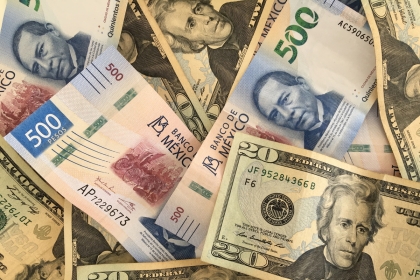
Mexico’s currency
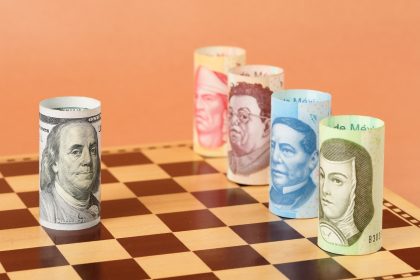
Mexican Peso (100 centavos = 1 Peso). For exchange rates and other useful information see Money in Mexico here on Mexperience.
Mexico’s Gross Domestic Product (GDP)
Here are some key economic indicators from recent official data published by INEGI and the Bank of Mexico.
- Mexico’s nominal Gross Domestic Product is around $35 trillion pesos (US$2.0 trillion).
- GDP growth in 2025 was 0.6%; compared with a 1.4% expansion in 2024.
- Last year’s growth was limited by a drop in fixed investment, particularly by the government, which isn’t unusual in the first year of a new administration. Employment grew but at a slower pace.
- Remittances, which tend to support household consumption, were down 4.6% from 2024 at US$61.8 billion in what was the first drop since 2013.
- Industrial production fell 1.3% with lower oil and gas production, lower construction activity, and output declines in the auto and textile industries, among others.
- The central bank projects growth of 1.6% in 2026, although private estimates are a little higher than that.
Inflation in Mexico
Official inflation at the end of 2025 was 3.7%, down from 4.2% in 2024. Core inflation, which strips out volatile prices like energy and fruits and vegetables, rose last year to 4.3% from 3.7% the year before. The Bank of Mexico expects inflation to end this year at about 3.5%, while private economists see it closer to 4%.
Mexico’s sales tax rates
Sales tax in Mexico is known as IVA Impuesto al Valor Agregado, or Value Added Tax (VAT). The rate is 16% for most of the country with a lower 8% rate in the 25 km (16 mile) deep ‘economic free zone’ corridor along the US-Mexico border, that includes the state of Baja California (but not Baja California Sur).
Most goods and services, including financial service charges and commissions (and also includes interest on unsecured debts) have the IVA rate applied to them. Notable items exempt from the IVA include staple foods, and medicines.
Minimum Daily Wage and UMAs in Mexico
Mexico’s minimum daily wage was raised on Jan 1, 2026 to $315.04 pesos from $278.80 pesos per day, a 13% increase.
The minimum wage along the Northern Border Zone was raised to $440.87 pesos a day from $419.88 in 2025, a 5% rise.
UMAs rose in line with official inflation, from $113.14 in 2025, to $117.31 for 2026.
See also: Mexico’s minimum wage
Mexico’s principal economic activities
Mexico’s principal economic activities include exports of manufactured goods, oil and gas, tourism, mining, chemicals, iron and steel, motor vehicles, agriculture (coffee, sugar, tomatoes, avocados, tobacco), food and beverages, consumer durables.
Major trading partners
USA, Canada, UK, China, and Japan.
USMCA
Mexico is a member of USMCA, the U.S. Mexico Canada Agreement which is a renegotiated version of the North American Free Trade Agreement, NAFTA. The USMCA is scheduled to be reviewed and renegotiated in June 2026.
Other free trade agreements
Besides USMCA, Mexico has other Free Trade Agreements (FTAs) with over 40 countries worldwide, including the European Union and Japan.
Learn more about money and currency in Mexico
Read our latest articles and guides related to money and finances.