
Register for Vista, the Free Mexico Newsletter from Mexperience
Our free Mexico Newsletter gives you ideas, inspiration and contacts to realize your experience in Mexico - whether your plans are for leisure, for lifestyle, for living or real estate... Register Now
Self Employment in Mexico
Working for yourself in Mexico is considerably more challenging than working for yourself in the USA, Canada or the UK. Some European countries have laws and regulations that make self-employment challenging too, as Mexico does, however in Mexico you will have the added cultural and language barriers to contend with.
We've published this guide to give you an complete overview about being self-employed and starting your own business in Mexico. It's best used in conjunction with the Working in Mexico guide in this section.
Self Employment in Mexico
Foreigners living in Mexico who possess specialist skills, especially in knowledge-based industries, coupled with the capability to market those skills successfully, often set up their own business (usually via means of a corporate entity) to earn a living.
Generally, self employment is not a route most young Mexicans think about when they leave college. It's not that Mexico does not have an entrepreneurial culture: just look at the plethora of markets and micro-business enterprises on any town or city street; it's simply that doing business in Mexico -- especially if you are small and under-capitalized -- is extremely challenging.
There is a whole raft of red tape and regulations to adhere to when you incorporate in Mexico. And once you are incorporated there are various fees and even more regulations that you need to comply with (and fines for non-compliance): they all absorb time and money.
Notwithstanding all of the costs and regulation, Mexico does have a large number of small business enterprises. Indeed, ask most Mexicans what one of their ambitions in life is and they will tell you "to have my own company, and to be my own boss".
Small businesses in Mexico do come and go frequently. Under-capitalization is often the critical, deciding, factor in a business demise: most small businesses in Mexico operate on a 'hand-to-mouth' basis, making it difficult to obtain the efficiencies of scale and market reach a well-capitalized infrastructure would provide.
Types of Business Foreigners Run in Mexico
Most foreigners who set up successful small or micro enterprises in Mexico are working in IT-based or knowledge-economy markets, for example: web design, computer programming (NB: not as technicians), professional writing, graphic design, specialized marketing, photography, translation and interpretation, training, and various types of commercial consulting.
Some are working for Mexican companies, bringing experience and know-how to local markets in Mexico; others have contracts from abroad and simply use Mexico as a base to operate from; some may have a hybrid of these two.
Foreigners are sometimes seen running tourism-related businesses: particularly specialist tour agencies offering tailor-made packages to travelers in niche markets, for example, adventure and eco tours, and services related to sustainable tourism; some operate small spas, hotels or B&Bs.
Some foreigners work as freelance translators and interpreters -- see Teaching and Translating for more information.
Ideally, you should enter a market that you know very well and in which you have at least several years of direct, practical experience. Research, do your homework thoroughly and choose the right location for your enterprise.
The Importance of Being Incorporated
Whereas in Canada, the US and Europe, many people are comfortable dealing with 'sole traders' for general trades and work, in Mexico this is not so. Companies like to contract with other companies, not individuals. Indeed, you may not do any business at all without a corporate entity (known in Spanish as Razon Moral or Persona Moral; in fiscal and tax terms an individual is referred to as a Persona Fisica).
A company may also shelter your personal assets in the event of bankruptcy, although banks usually request personal guarantees from the business directors or owners as collateral for small company loans and, as in any country, the company's officials may be personally liable for any proven fraud or illegal activities the company enages in.
Being Employed by Your Own Foreign Company
If you own a company in a country other than Mexico, and that company has a proven income, then this may be a route for you to work self-employed in Mexico. It's not always possible to do this; it depends on what your company does and your circumstances.
For example, if you're a web designer and your company has contracts with web design houses overseas, you may be able to 'contract' via your foreign company and physically work in Mexico. Your remittances come from abroad and these (proven) remittances may be used as evidence to secure a FM3 Work Visa.
However, if you plan to set up a 'bricks and mortar' business; say, exporting goods from Mexico, this may simply not be practical as you will need a Mexican company to trade; especially if you are dealing with established Mexican companies and/or selling to Mexican companies.
If you plan to sell any services to Mexican companies, you will definitely to have a corporation set up in order to do this whether it's in Mexico or abroad.
High Risk Businesses in Mexico
Some foreigners fall in love with the romanticism surrounding living and working in Mexico, perhaps after spending a vacation or sabbatical next to the ocean or some attractive colonial city and soon wake up having decided that 'Mexico is the place for me'.
The first consideration to come to someone's mind in these circumstances is usually: 'how will I make a living?'; and, in a number of cases, this may be answered by 'I'll start a beach bar or restaurant in Mexico!'.
Beware of entering into already crowded markets: for example, beach bars, cafes, restaurants and "yet another" B&B or hotel somewhere in a Mexican Paradise. People have invested their life savings in these high risk enterprises and lost their shirt trying to set up and run these types of business in Mexico.
Also beware about entering into a market where you have limited or no experience. Some foreigners have started successful catering businesses in Mexico; however, delve under the surface and youmay find they are people who have spent their lives in the catering industry and had some serious capital behind them when they arrived in Mexico -- see 'Success Factors' below.
In recent years, some foreigners have arrived in Mexico and taken jobs as real estate sales representatives: either as independent agents or as tied-agents to a developer or an established Mexican realtor. Many of the people in these circumstances arrived in Mexico with substantial capital savings under their belt and thus could fulfil the immigration requirement of 'having sufficient funds to support yourself while in Mexico' (see Immigration for details); thus were granted an FM3. Selling real estate is hard work and most reps work on a commission-only basis.
If your expertise is that of a trades or crafts-person; for example, electrician, plumber, carpenter, etc, Mexico is not the place to move to and start a business. The same is true for people in the medical profession, e.g. doctors, nurses, dentists, psychologists and other therapists.
Setting-Up a Corporation in Mexico
The nuts and bolts of setting-up a legal entity (corporation) in Mexico are not that complicated. There are a number of different types of corporation to choose from, and you should seek legal advice about which one is most appropriate for your situation.
Once you have decided on which type of company you want, you fill out some paperwork, show some proof of identification and that your stay in Mexico is legal (e.g. visa), pay your fees and wait for the procedures to work their way through the system.
Your Mexican RFC
You come out of the other end with, among other things, the 'all important' RFC number and accompanying 'seal': the RFC is an acronym for Registro Federal de Contribuyentes -- meaning 'Federal Register of Contributors' which you should tell you exactly what that's all about: collecting taxes from your corporation.
Without a RFC you cannot issue invoices and you cannot request official receipts for business expenses without presenting the supplier a certified copy of your company's RFC seal. All invoices in Mexico must be produced for your company by specially licensed printers and each invoice will have your RFC printed upon it. Every invoice is numbered and must be accounted for; if one is cancelled or lost, special forms must be duly completed and submitted with your accounts to vouch for the missing invoices. You need to price these additional admin costs into your business model.
The Role of the Notary Public
Technically, you don't need a lawyer to start a corporation, but you should probably hire one to get the legal matters right from the start. The person that you will absolutely need to contract is a Public Notary. Public Notaries in Mexico are not like Public Notaries in the USA; in Mexico they must meet certain age and qualification criteria be appointed to their post by the Governor of the State. They have significant legal powers and responsibilities, including the registration of Mexican real estate deeds and matters relating to incorporations.
Administrative Responsibilities
Once your company is registered and running, that is when the administrative 'fun' begins. The term for the completed registration of a company in Mexico is known in Spanish as 'Dado de Alta'; if you de-register or suspend your company for any reason the term is 'Dar de Baja'.
Mexico has an entire raft of laws, regulations and legal filing requirements, with fines and penalties for non-compliance. You will need professional help in the form of an accountant, possibly a public writer, a lawyer and -- again -- a Notary Public, at some stages, to keep on top of it all.
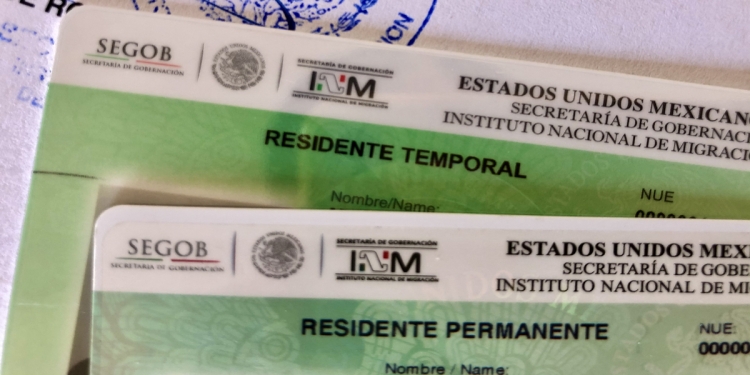
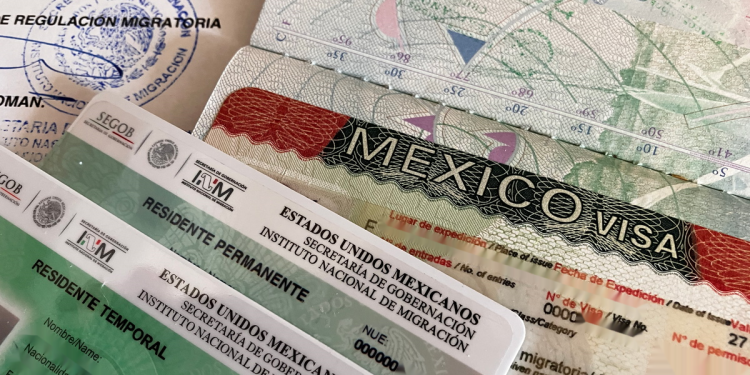
It's worth noting that you can set-up a company in Mexico while in possession of a FMT Visa (Tourist Permit) but you cannot work for that company in Mexico or be paid by it except in dividends. In order to set-up AND work for that company you will need a FM3 or FM2 Visa.
If you marry a Mexican national, you could get a company set up in their name and get them to hire you -- effectively sponsoring your FM3 Visa.
Dealing with Mexican Banks
Banks in Mexico are beginning to offer more funding options to small businesses, but the process has been slow as finance is not available as inexpensively in Mexico as it is in the US, Canada and most of Western Europe, for example.
Any finance you seek in Mexico will cost considerably more expensive than you are probably used to paying in the USA or western Europe.
See the Mexperience guide to Banks, Banking and Credit in Mexico for a comprehensive overview of the banking system in Mexico.
Business Overheads in Mexico
Another point of note about operating your own business in Mexico is that overheads will be higher than you may expect -- especially if you are used to operating in the United States, where extensive competition and low regulation make operating costs very attractive indeed.
Even day-to-day overheads will be higher in Mexico than in the US; for example, office supplies, IT equipment, cameras, cars and commercial vehicles, the price of gasoline and diesel will all be higher.
You need to be well-capitalized to start and run a successful business in Mexico. Start-up costs, overheads and hidden fees are higher than you think and you need to be able to cover your overheads in the early years, perhaps in the face of very few sales.
Employment Law
If your business involves hiring other people in Mexico, note that Mexican Employment Law is complex and favors employee rights over company flexibility (in contrast to most States in the USA).
Mexico is highly unionized with several very large and very powerful unions representing workers across most industry types. Unions in Mexico have a lot of political clout and may avail themselves of significant financial resources to fight a legal case on a member's behalf.
You will need to get you employment policy right: making the wrong decision or taking inappropriate action could lead your business into a dispute with the union, law legislation, or both.
There are a number of bonuses and benefits you must pay your employees, by law, in addition to their regular pay. And, like all companies, you will need to collect income tax from employee's salaries and pay your employee's and your company's social security contributions for every employee you hire (including you).
You may want to consider hiring personnel via one of the many employment agencies now operating in Mexico. They may guide you and even employ the person on your company's behalf, saving you the expense and paperwork; although hiring through agencies is dearer than hiring direct; you need calculate the trade-off given your situation.
Also see: Recruitment Agencies in Mexico; Employment Conditions in Mexico
Key Success Factors for Self Employment in Mexico
Key factors for success when starting, running and continuing a small business enterprise in Mexico include:
Capitalization: Ensure that you have sufficient funds to open and run your business for a longer period than you would normally expect in the USA, Canada or Europe; ideally, at least a couple of year's worth of operating expenses. It can take longer and cost more to get small or micro business up-and-running profitably in Mexico.
Keep Costs Low: Trim your expenses in the early years and keep them trimmed thereafter. Mexico has a lot of 'hidden expenses' when you are running a small business so by keeping costs which you know about to the minimum, you will create a cushion for the ones you cannot yet see. Also, markets and the commercial environment tend to be more volatile in Mexico than you may be used to in the States, Canada or the EU, so keeping your costs low will help you ride out any sudden, unforeseen, change of commercial enviroment.
Local Knowledge and Local Contacts: You need to know your market intimately (and that includes who your customers are going to be); you need to know your business inside-out; you need to speak, read and write Spanish (or be able to afford to hire expert translators and interpreters); you need to be amiable and patient with local customs; and you need to get involved in the local community and develop contacts. Mexico is very much a "who you know" culture when it comes to all things commercial and having a good working relationship with your suppliers, your contractors as well as key local influencers can make the difference between your business working out and your business going bust -- however good the idea may be or how much demand you are tapping into.
Making a Contribution: Local people like to see the contribution your company is making to their community. Ensure that your business gives something back -- and is seen to do so. That means doing things like hiring local suppliers, contracting local trades people and hiring local workers wherever possible. Where you have to hire from outside, be clear about why you are doing so and try to entwine, where possible, external and local functions so as to promote sharing of information and knowledge.
Get Your Sales Marketing Right: Selling to markets in Mexico is different to the USA, Canada and Europe. Although your clients may be foreigners, you may also have a significant opportunity if you market to the domestic market successfully. You can find guides and tips about this on our Guide to Doing Business in Mexico.
Also See: Society & Culture in Mexico; Social Etiquette in Mexico