



Counterfeit banknotes circulate in Mexico, as they do in every country around the world. Notwithstanding the prospect of a twelve-year prison sentence for counterfeiting money, some people still chance their luck by printing rogue notes in an attempt to pass them off as genuine.
Although credit and debit cards are widely accepted now, Mexico is still very much a cash-based economy, so even if you use your plastic extensively, there will be times when you will need to deal in cash.
Security checks are common, especially for higher value banknotes
Trouble may arise if you innocently offer a counterfeit note for payment and have the bill checked, refused, and possibly confiscated. Most stores and all exchange houses have security devices on-hand to make an immediate check of the paper quick and simple.
Modern Mexican banknotes carry a range of security features. Most are similar to those you see on banknotes issued world-wide, making it easier to spot a fake. The latest series of notes being issued by the Bank of Mexico include some state-of-art anti-counterfeiting measures, most notably a holographic feature on the note’s face, the image of which changes as the note is tilted.
Tips for spotting fake notes
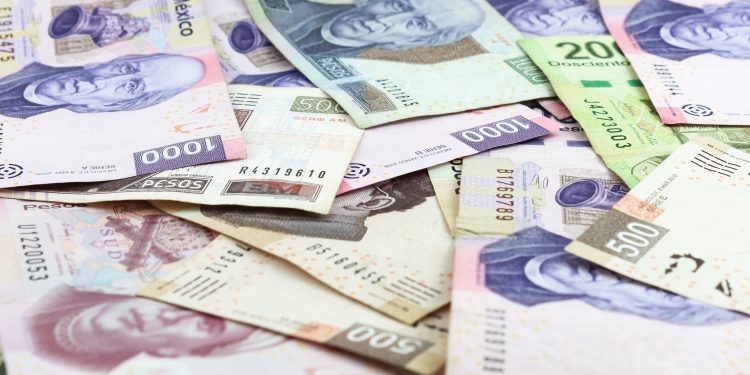
To help you avoid getting caught out by fake banknotes, here is a summary of Mexican banknotes and the main security futures you should become aware of when you are handling them:
Paper and polymer for banknotes
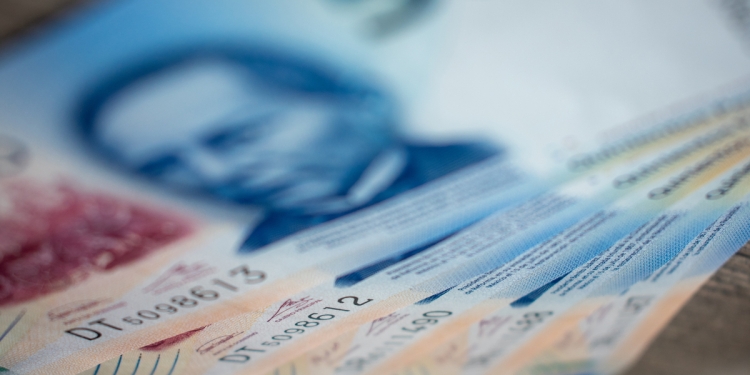
On the latest series of Mexican banknotes, the three lowest denominations —the $20, $50 and the $100 peso notes— are printed on polymer, a special type of plastic paper. The other three —$200, $500 and $1000 peso notes— are printed on traditional banknote paper, which has that same crisp and distinct feel of genuine banknotes issued in all countries.
Banknote paper is made using fabric fibers instead of wood pulp and, unlike most commercially-available paper, it does not have any china clay or other dyes added to it, which is why banknote paper fluoresces differently in comparison to regular paper under the light of an ultra-violent lamp.
When you’re handling Mexican banknotes, be sure to feel the paper; it should feel the same as, for example, US or Canadian dollars, British pounds, or euros. If the note doesn’t “feel” right —paper used for counterfeit notes is often thicker than genuine banknote paper— check for additional security features.
Watermark and other embossed features
All paper banknotes in Mexico have a “watermark” added to them, and when you view the note through a back-light, the silhouette image should appear in an otherwise clear area of the note. On polymer plastic notes, the watermark is substituted by an embossed feature visible through transparent areas on the bill.
Holographic features
Banknote paper is molded, allowing security features like watermarks and threads to be added during the production process. The current series of Mexican banknotes contain several of these state-of-the-art security features.
The principal and most immediately visible security feature on the $200, $500 and $1000 peso banknotes is a distinctive holographic optical thread woven vertically on the front (face) side of each banknote; as you tilt the note the image on the thread changes. This ‘holographic’ effect is also present on the note’s value number printed in the top right corner.
On polymer notes, check for embossments crisply pressed into the bill as well as holographic ink on key elements of the note’s artwork—the effects of these become visible when you tilt the note in the light.
Special printing
Banks employ a very special printing process when they create their bills which presses the imagery onto the note; this process gives the printing a “raised” feel that is especially noticeable on new paper.
In any state of wear, the printing on the note, whether it’s polymer or traditional banknote paper, should be crisp, clear, and never blurred; with definitive lines and consistent coloring.
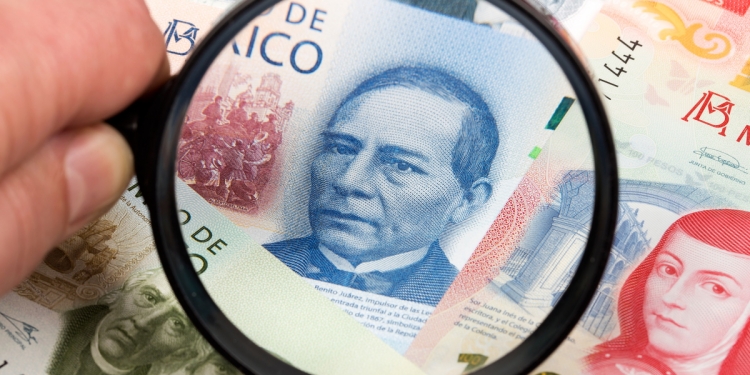
Related to this, Mexican bank notes feature “micro print” which is always clear and crisp when viewed close-up or under a magnifying glass.
Have you been given a fake Mexican banknote?
If you’ve been given a fake banknote in Mexico, read Dealing with Counterfeit Mexican Banknotes for information and advice about what to do.
Learn about money and banknotes in Mexico
Mexperience offers you a wealth of information about Mexico’s money, banking services, and banknotes.
- Articles about Mexico’s banknotes
- Latest articles about Money and finance in Mexico
- Download our free eBook about Money and Bank Services in Mexico
- Download our free eBook about the Cost of Living in Mexico
Mexico in your inbox
Our free newsletter about Mexico brings you a monthly round-up of recently published stories and opportunities, as well as gems from our archives.